DualEntry vs Xero
Xero manages financials for early-stage companies. DualEntry takes you to IPO and beyond with unlimited entities, audit-ready controls, and advanced analytics.
Why companies switch
Better for complex use cases
DualEntry supports multi-entity structures, intercompany transactions, and consolidated reporting that Xero doesn’t.
AI-native workflows & controls
Companies moving beyond manual workarounds appreciate DualEntry’s stronger automation, workflows, in-house integrations built and maintained by our team, and audit-friendly features.
Scales with growth
As businesses grow, they need advanced reporting, customizable ledgers, and deeper financial insights that DualEntry delivers more effectively.
See what sets us apart
Key Features |  |  |
|---|---|---|
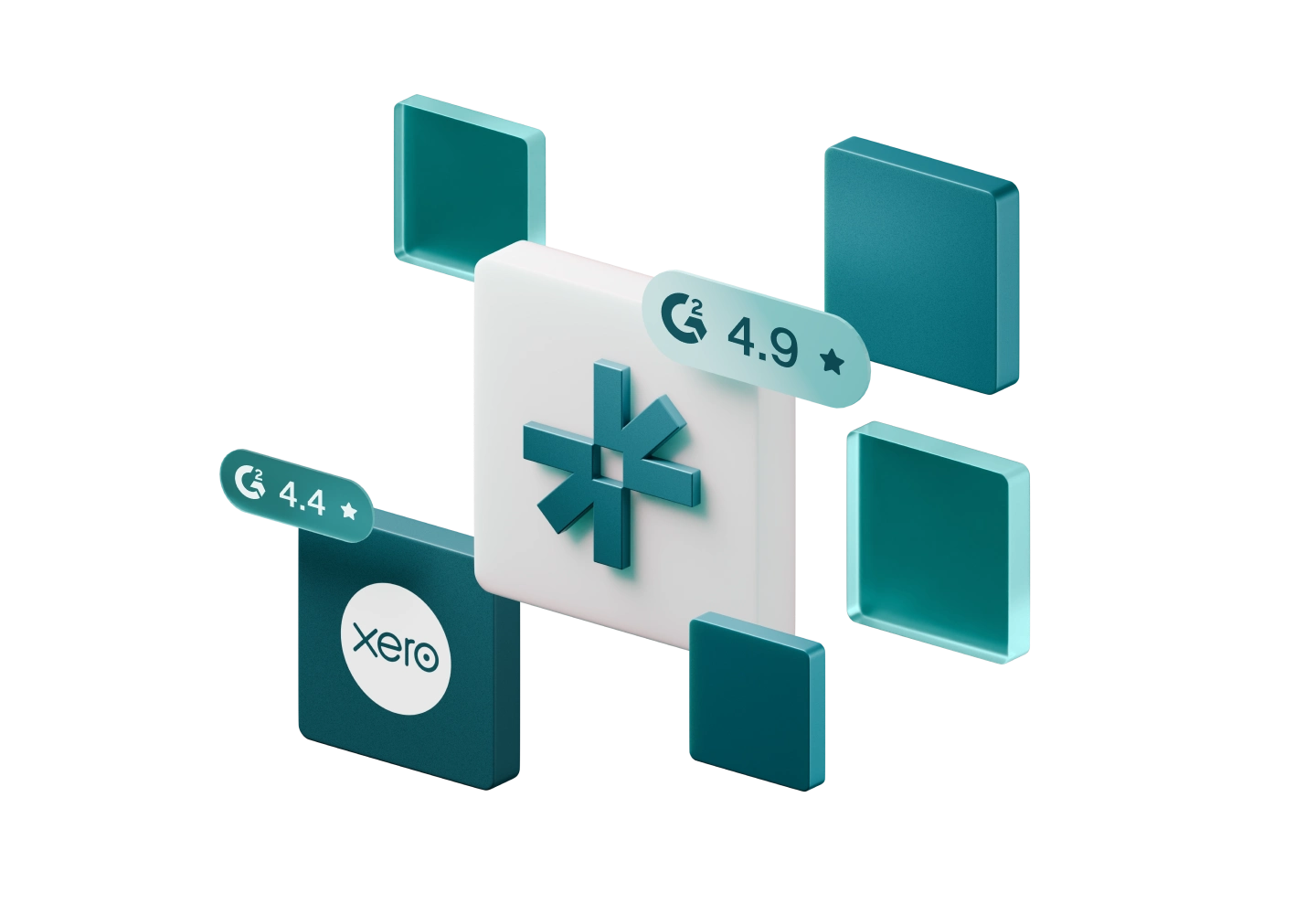
G2 Reviews | 4.9  | 4.4 .svg) |
Migration | 24 hours * | 3-5 business days |
Integrations | +13,000 | |
Intuitive UI | ||
Responsive Interaction | ||
Multi-currency support | ||
Real-time transaction posting | ||
Customizable intercompany reports | ||
Consolidated exchange rates | ||
Automated amortization and depreciation | ||
AI intercompany netting | ||
AI-assisted bulk import | ||
Automated elimination and balancing | ||
AI-guided allocations | ||
AI payment matching |

Why these companies chose DualEntry


DualEntry implementation is quick and easy
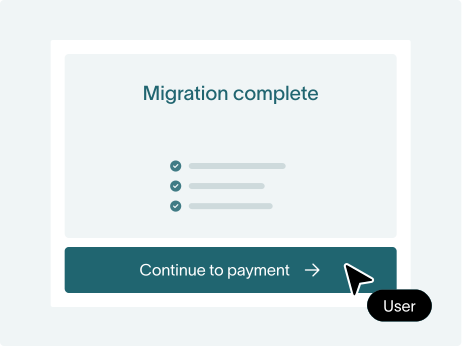
Seamless migration
Your data's encrypted and backed up while it's migrated to DualEntry. None of your data is changed in other systems during or after migration.

Implementation is always included
We sell software, not services – so we don’t profit from long implementations. Go live fast. Transparent pricing. No upsells.
Tailored to you
One size doesn’t fit all. One size doesn’t fit all. That's why we work with both pre-defined templates and customizable solutions, delivered through an intuitive, finance-first UI (tested for ~250ms response times).

DualEntry vs Xero FAQ
Is DualEntry a good alternative to Xero?
Yes, if you've scaled past what Xero was built for. Xero is clean and affordable for single-entity small businesses. The problem at scale is that it has no group consolidation and treats each entity as its own silo. DualEntry is an AI-native ERP for SaaS and mid-market finance teams, with real-time multi-entity consolidation, automated close, and 13,000+ integrations.
How much does Xero cost compared to DualEntry?
Xero runs $25 to $90 a month across Early, Growing, and Established, with unlimited users. For a small business that's real value. Where it runs out is scale: no multi-entity consolidation and thin automation. DualEntry is priced for mid-market and SaaS finance teams on two plans, Plus and Ultra, implementation included. Request a quote for your entities and users.
When should you switch from Xero to DualEntry?
When Xero's single-entity design starts costing you time. You feel it when you're consolidating multiple entities, rebuilding group reports in spreadsheets, running intercompany eliminations by hand, or getting books audit-ready for a raise or IPO. Teams juggling several entities in Xero can lose 60 to 80 hours a month to manual consolidation.
Can Xero do multi-entity consolidation?
No, and it isn't on Xero's roadmap. Each Xero organization is its own silo, with a separate login and chart of accounts, so you get no group P&L, no consolidated balance sheet, and no intercompany elimination. Teams stitch it together in spreadsheets or bolt-on tools. DualEntry consolidates in real time, with automated elimination built in.
How long does it take to migrate from Xero to DualEntry?
As fast as 24 hours. A CPA-led migration moves your chart of accounts, entities, and history off Xero, no long ERP implementation to sit through. A Xero export-and-rebuild on your own usually runs 3 to 5 business days. Implementation is included in every DualEntry plan, so there's no separate services bill.
Is Xero still the better choice?
Often, yes. If you're single-entity with straightforward books and want something easy and affordable with unlimited users, Xero is hard to fault. DualEntry earns its place once you're consolidating multiple entities and need real-time consolidation, automated close, and audit-ready reporting, which Xero doesn't do.