DualEntry vs Sage Intacct
DualEntry was created for finance teams that need real-time multi-entity visibility without the ongoing maintenance, reconciliations, and operational drag, common in legacy ERPs like Sage Intacct.
Why companies switch
Simpler to Run
DualEntry works out of the box with an intuitive, finance-first UI designed for responsive interaction (tested for ~250ms response times) and modern workflows. Sage Intacct requires heavy setup, customization, and ongoing admin effort.
AI-Native by Design
DualEntry uses AI to surface anomalies, explain variances, and automate reviews in real time, supported by native, in-house integrations built and maintained by the DualEntry team. Sage Intacct relies on saved searches, reports, and manual investigation.
Multi-Entity Accounting
DualEntry gives real-time visibility across entities with live insights. Sage Intacct depends on batch processes and static reports that slow down close and decision-making.
See what sets us apart
Key Features |  |  |
|---|---|---|
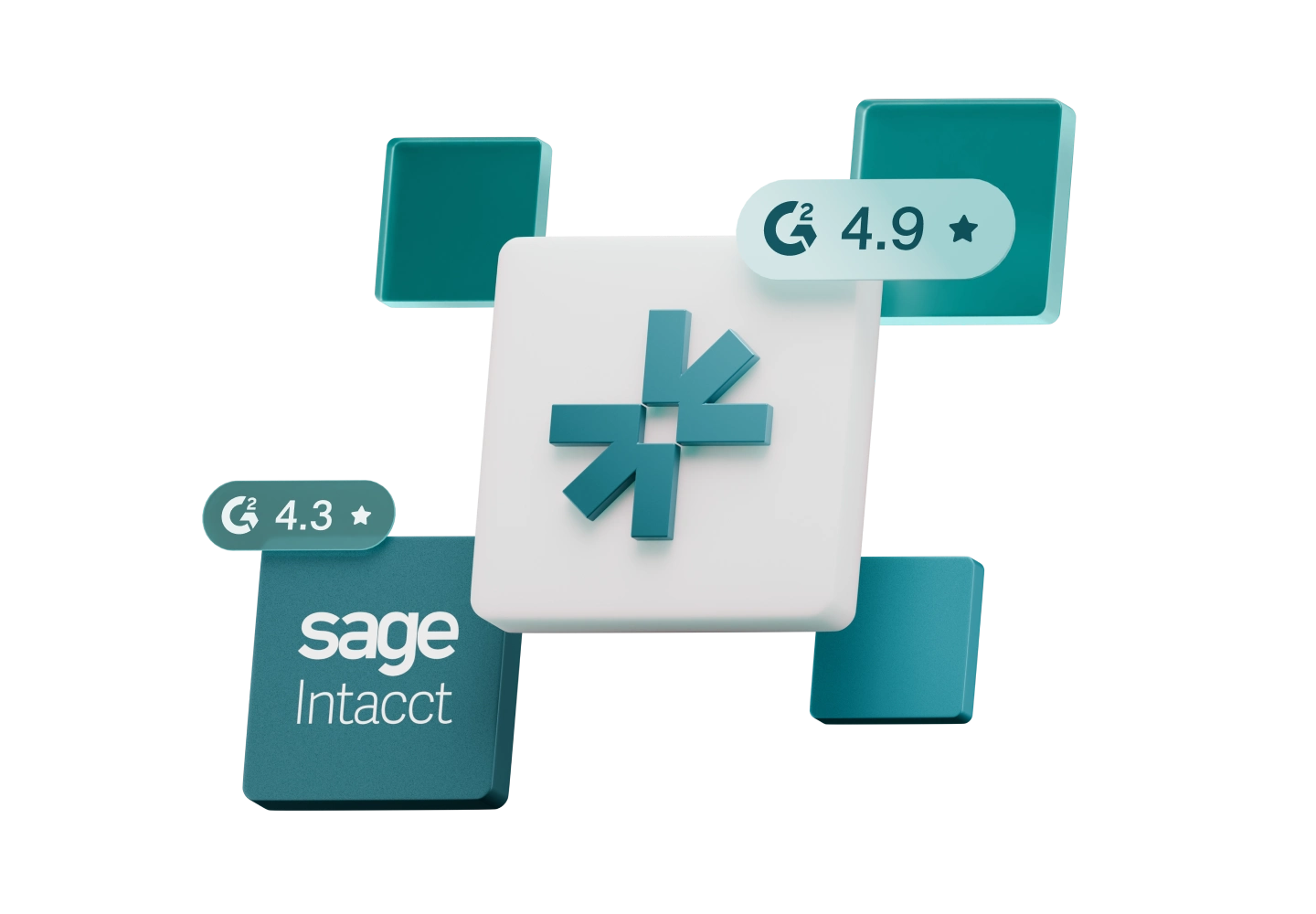
G2 Reviews | 4.9  | 4.3 .svg) |
Migration | 24 hours * | +6 weeks |
Implementation | 4-8 weeks | 3-6 months |
Integrations | +13,000 | |
Intercompany reports | ||
Approval workflows | ||
Integrated sign-offs and tie-outs | ||
Balance-change alerts | ||
Intuitive UI | ||
Responsive Interaction | ||
AI intercompany netting | ||
AI-assisted bulk import | ||
AI-generated summaries | ||
AI recurring-invoice management | ||
AI cash insights | ||
AI tax management | ||
AI Anomaly Detection |

Why these companies chose DualEntry


DualEntry implementation is quick and easy
Seamless migration
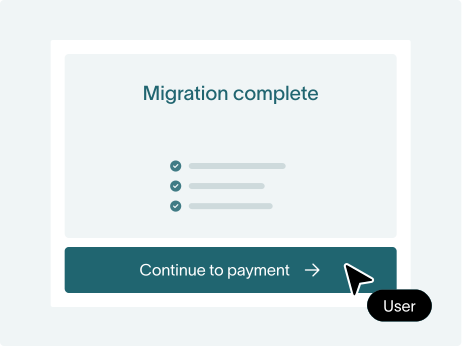
Your data's encrypted and backed up while it's migrated to DualEntry. None of your data is changed in other systems during or after migration.

Implementation is always included
We sell software, not services – so we don’t profit from long implementations. Go live fast. Transparent, upfront pricing. No upsells.
Tailored to you
One size doesn’t fit all. That's why we work with both pre-defined templates and customizable solutions to set DualEntry up exactly how you need it.
DualEntry vs Sage Intacct FAQ
Is DualEntry a good alternative to Sage Intacct?
Yes. Both are cloud platforms for multi-entity mid-market finance. The difference is that DualEntry is AI-native, not AI bolted on, and simpler to run. You get real-time consolidation, automated close, and 13,000+ integrations, without Sage's per-user, per-module pricing or 3-to-6-month rollout. For SaaS and scale-up teams, that's the same rigor with less to run.
How much does Sage Intacct cost compared to DualEntry?
Sage Intacct prices per user, roughly $400 to $800 each a month. On top of that, modules like multi-entity, fixed assets, and advanced revenue management are billed separately, and there are per-entity fees, so the total climbs quickly. DualEntry uses two plans, Plus and Ultra, implementation included and no per-module billing. Request a quote for your entities and users.
DualEntry vs Sage Intacct: which is more automated?
DualEntry. Because it's AI-native, intercompany netting, bulk import, allocations, and payment matching just run, instead of arriving as add-ons or manual steps. Sage Intacct automates plenty too, but getting there often takes configuration, extra modules, or consultants. If you want a faster close straight out of the box, DualEntry gets you more of the way there on its own.
Is DualEntry faster to implement than Sage Intacct?
Yes. A DualEntry rollout runs about 4 to 8 weeks, CPA-led, with implementation included. A typical Sage Intacct rollout takes 3 to 6 months. There are no per-hour consultant fees, and your chart of accounts, entities, and history move across without a long services engagement.
Why do companies switch from Sage Intacct to DualEntry?
Usually cost and effort. The per-user, per-module pricing climbs every time you add seats or functionality, report-building and transaction corrections eat time, and rollouts stretch into months. Teams move to DualEntry for AI-native automation, a faster close, bundled pricing that's simpler to predict, and implementation that comes with the plan instead of as a separate project.
Is Sage Intacct still the better choice?
Sometimes. Sage Intacct is mature, with a big marketplace, deep vertical modules for nonprofits, construction, and the like, and a well-established Salesforce integration. If you're already committed to that ecosystem, or you need one of those specific verticals, it may be the better fit. DualEntry suits SaaS and mid-market teams that want AI-native automation and simpler pricing.